
The Problem with a Perfect Report Card
What my third-grade teacher got wrong

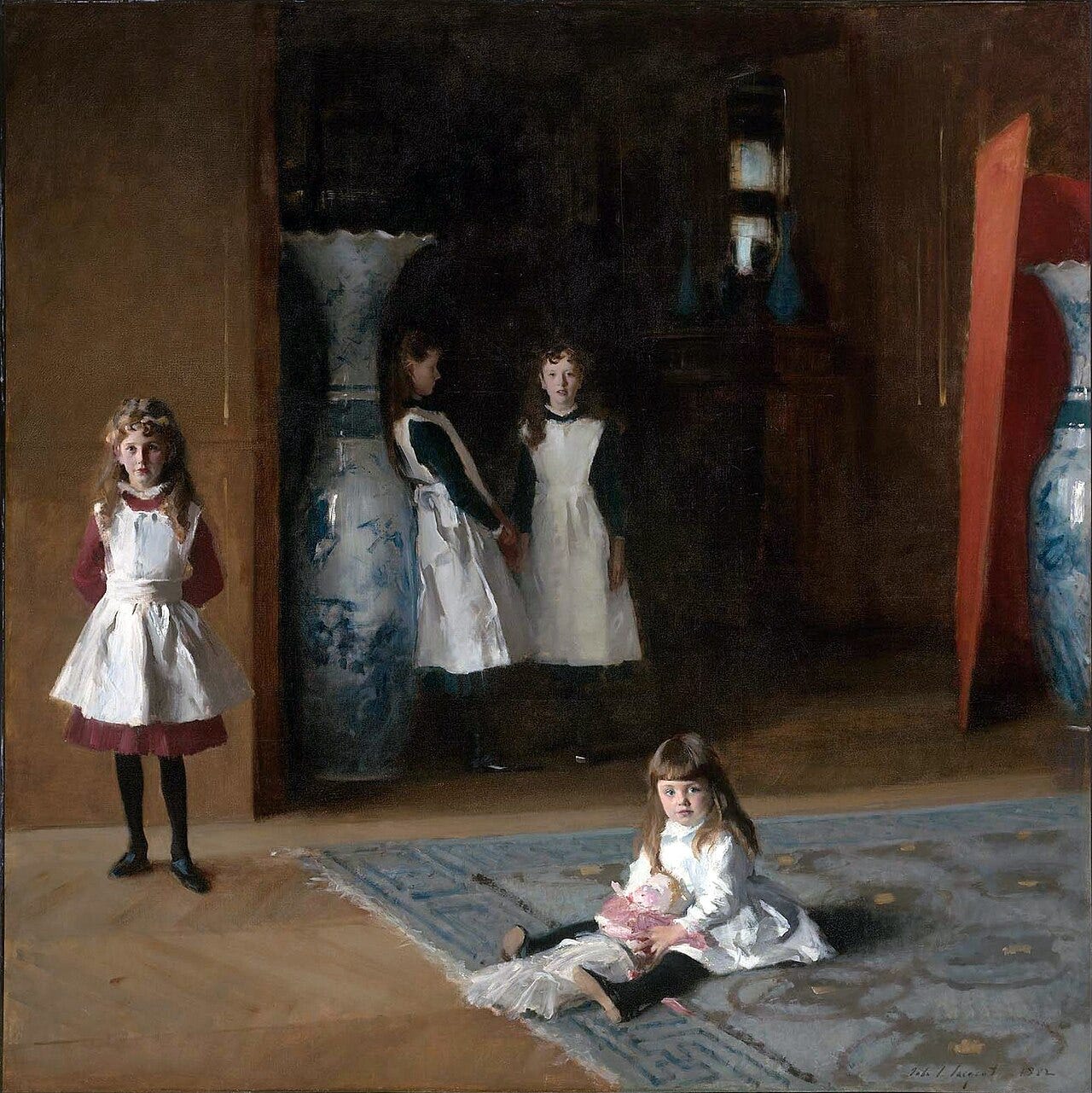
In third grade, I brought home a report card with perfect scores on every line.
There must have been sixty boxes on it. Reading comprehension, multiplication, classroom behavior, participation, gym. Each box, 10/10. Loads of praise, and no comments pointing toward improvement. Just row after row of perfect scores.
I remember standing at the kitchen counter holding the manila envelope in both hands, feeling proud at first. Giddy, even. I had done school correctly. At nine years old, that felt important. I felt important.
And then another feeling arrived underneath it.
I felt unsettled and confused. 10/10 across the board, what did that even mean? If everything was perfect, what was left to do?
I don’t blame the teacher. She probably thought she was encouraging me. But looking back, I think it was an irresponsible thing to communicate to a child. Not because children need criticism for the sake of it, but because perfection suggests finality. It tells you there is nowhere else to go.
A year later, another teacher handed back an essay with a comment written across the top. This doesn’t have a voice yet. You need to develop your own point of view.
I remember feeling taken aback -- offended even. I had followed her instructions exactly. I had reproduced the structure we were taught, mirrored the writing we were reading, and put in hard work as usual. Why was that not enough?
But underneath my surprise and growing 10-year-old ego, deep down I knew she was right. There was absolutely something missing from the work, and worse, it was something I didn’t know how to study for. I was ten years old. Where could I find this voice I was supposed to have?
I think about what those two teachers told me about myself long before I could make sense of it. One rewarded performance. The other pointed toward growth. And it turns out I much prefer the second one.
Decades later, my cofounder and I flew to Montreal for the Global Food Tourism Conference. We had been building Devour Tours for five years by then and still felt like impostors every day. We came with notebooks and lists of questions, hoping to learn from people who had been doing this longer than we had.
At the awards ceremony, they called our name: “Congratulations to the fastest-growing food tour company in the industry!”
Everyone at our table clapped and the room turned toward us, smiling. We stood for the photo, accepted congratulations, did all the things you are supposed to do in moments like that.
But internally, my reaction was less triumph than disbelief.
This is not true, I remember thinking. We still had so much left to learn.
Because the next morning, we were scheduled to meet with Casey, a business advisor who had already built and scaled companies far beyond ours, and I wanted that meeting far more than I wanted the award. The award felt like a conclusion to a story that was just getting started. Casey represented expansion.
Over the next few years, working with him changed the company completely. Up until then, I had built mostly through grit, instinct, intensity, and self-education. If there was a problem, I worked longer. If there was a skill gap, I read more. That approach worked for a long time. But it always stops working at some point.
What I needed at that point wasn’t praise for working hard. I needed the frameworks I didn’t yet have, and someone who could see what I couldn’t yet see myself.
Casey gave me a phrase I use daily ten years later: “you don’t know what you don’t know.”
In retrospect, the tension I felt at that conference came from the same place as the gap between those two teachers. The third-grade teacher told me I had arrived. The fourth-grade teacher gave me somewhere to go.
Around that same period, my body was failing me in ways I could not make sense of.
The pain began in my sciatic nerve and spread through my back, legs, and arms. But the MRIs came back clean, and multiple X-rays showed nothing. Eventually, a neurologist used the word fibromyalgia, which at the time felt less like a diagnosis than an official admission that nobody had an answer.
I wanted evidence. I wanted a scan that lit up with something obvious and fixable. Instead, I got more uncertainty (they scheduled another MRI in five year’s time!), which I handled the same way I handled everything back then, by pushing harder and harder at work.
I spent much of that year traveling for Devour. I was pulled in all directions: building new destinations, hiring guides, troubleshooting problems in person, running meetings from hotel rooms that smelled like stale cigarettes because even after the company could afford better, some part of me still believed the work only counted if it hurt a little. So I woke up in pain, took ibuprofen, answered emails, and kept moving.
At no point did it occur to me that slowing down might be part of the solution. I didn’t think the body and mind had much to do with one another (“you don’t know what you don’t know”). I thought the body was machinery that occasionally broke down and needed repair, so you could get back to work.
Then I got pregnant with twins. And at twenty-nine weeks, sudden, unexpected pre-term labor put me on complete bed rest at Madrid’s best hospital for premature babies.
And I remember lying in the hospital bed and realizing that my biggest fear, more than my worries about premature babies or an unwanted C-section, was something that felt too ugly to admit out loud:
I was terrified of slowing down, of being left alone with myself without the scaffolding of checklists and the constant reassurance that I was doing enough.
I could physically feel how deeply productivity had fused with my sense of self because the thought of being unable to produce anything filled me with panic. I kept a checklist on my phone to cling to some semblance of control. I checked things like ate breakfast and brushed teeth as visible progress toward the end goal of healthy babies and a body that could stand up again.
The babies came at thirty-two weeks, healthy despite everything, though that period deserves its own essay. What stayed with me most was the realization that even immobile in a hospital bed, I was still trying to earn my right to exist through output.
Despite it all, the company kept growing. I’d done the right things before maternity leave to ensure I wasn’t essential. For many people, this is the dream. For me, it was just proof that I could absorb more.
When COVID came, we rallied again. My penny-pinching over the years meant the company could weather the storm financially. We were able to pay everyone severance and even keep a few of us on part-time. Then, in the middle of all that uncertainty, we sold.
From the outside, this was the happy ending. We had built something valuable enough that someone else wanted to own it. We had survived an industry-wide collapse. We had made it through! It was the perfect report card once again.
But I was too accustomed to organizing my life around difficult things to know what to do when one ended.
I should have felt relief, pride. Instead, I felt grief for the path not taken and shame for not braving the uncertainty and hanging on. Not because I wanted more money or a bigger title, but because I wanted to discover my limits -- to continue to develop the voice I’d finally claimed as my own. I also feared the comfort of employment, of becoming someone who watched life instead of driving it.
Five years later, I am again turning uncertainty into output.
I haven’t yet left one role, and I’ve already drafted a demanding sabbatical curriculum for myself. I started writing essays at the beginning of this year to literally find my voice once again, but then catch myself checking subscriber counts to determine whether the writing “matters.”
There is a small exception to this pattern: I joined a gym because the algorithm told me that women my age are supposed to strength train. And for once, I didn’t need the KPIs. No macros, no transformation photos, no spreadsheets tracking progress.
And even without them I keep going. Not because I expect some dramatic transformation, but because I like the feeling of becoming slightly stronger over time. I can pick up my six-year-olds without worrying about my back. I sleep better and rarely have pain.
I suppose other parts of my life are growing again too. I like reading for no reason beyond a hunger for knowledge and immersion in other worlds. I like long dinners with friends, and I now protect them deliberately because I’ve seen how easily relationships disappear when work consumes all available space.
For years, work provided momentum, identity, structure, self-worth, growth, community, and a way to measure whether I was moving forward or standing still. It did all of those things well enough that I stopped building much else around it.
I understand something now that I didn’t understand when I was nine years old, staring at that report card. The unsettling feeling wasn’t disappointment that the score couldn’t go any higher. It was discomfort with the idea that there was nowhere left to grow.
Back then, I only knew how to look for growth in places I could measure.
I’m trying to build a larger life now. One where work still matters deeply, but where growth also exists in friendships, in writing, in strength, in attention, in the parts of myself no report card can score.
Because the nine-year-old at the kitchen counter didn’t want a higher score. She just wanted room to grow.
Your posts always give me pause for thought! PS fellow twin mum here! 🙋♀️