
Accumulation

I have a tower of books next to my desk. Another on my nightstand. A shelf so full that new arrivals have to be stacked horizontally on top of the ones already standing. Every now and then, they tumble to the floor—a reminder that they’re not useful the way they’re displayed. A reminder to put them away, to declutter.
I pick them up. I restack them. I don’t put them away.
Because as long as they’re there, there is still the possibility that I will become the woman who has read them. And the hope that the knowledge they contain will somehow be transferred onto me, and I will be different.
These towers remind me of the ones I checked out at the library at nine years old. I’d head toward the librarian’s desk with my arms full, sometimes spilling over. She’d say something like, wow, I haven’t seen someone take out fifteen books before. For me, that was a flash of pride, confirmation that I was special, or at least different.
And I read those books. I’d race straight home and dive in. Topic by topic, story by story, mostly fiction at that age, each one offering a different view of the world and the ability to escape for a few hours into someone else’s life. I came out slightly changed after every one.
But in contrast to the towers I devoured during nine-year-old weekends and summers, now I collect. I accumulate.
A title catches my eye—usually referenced in a group chat or surfaced by the algorithm—and I need to have it. Often, these books are educational. A biography of someone formidable. A book on philosophy, psychology, communication, business. Others are award-winning fiction from the past and present, books I know could take me back to that space I lived in as a kid—totally enthralled in the stories of others. A space I deeply miss and rarely visit nowadays.
And so I buy and buy. And with each purchase, I keep buying this version of myself I think I might become if I ever get around to reading them: more disciplined, more informed, more articulate, more evolved.
The stacks have become a promise I keep making. Enough of them will finally fill my gaps, round me out, make me whole. Make me worthy.
But most nights, after the childcare shuffle and the five minutes of reading before my eyes start to close, nothing transforms. The books remain unread. And I remain unchanged.
But the stack keeps growing.
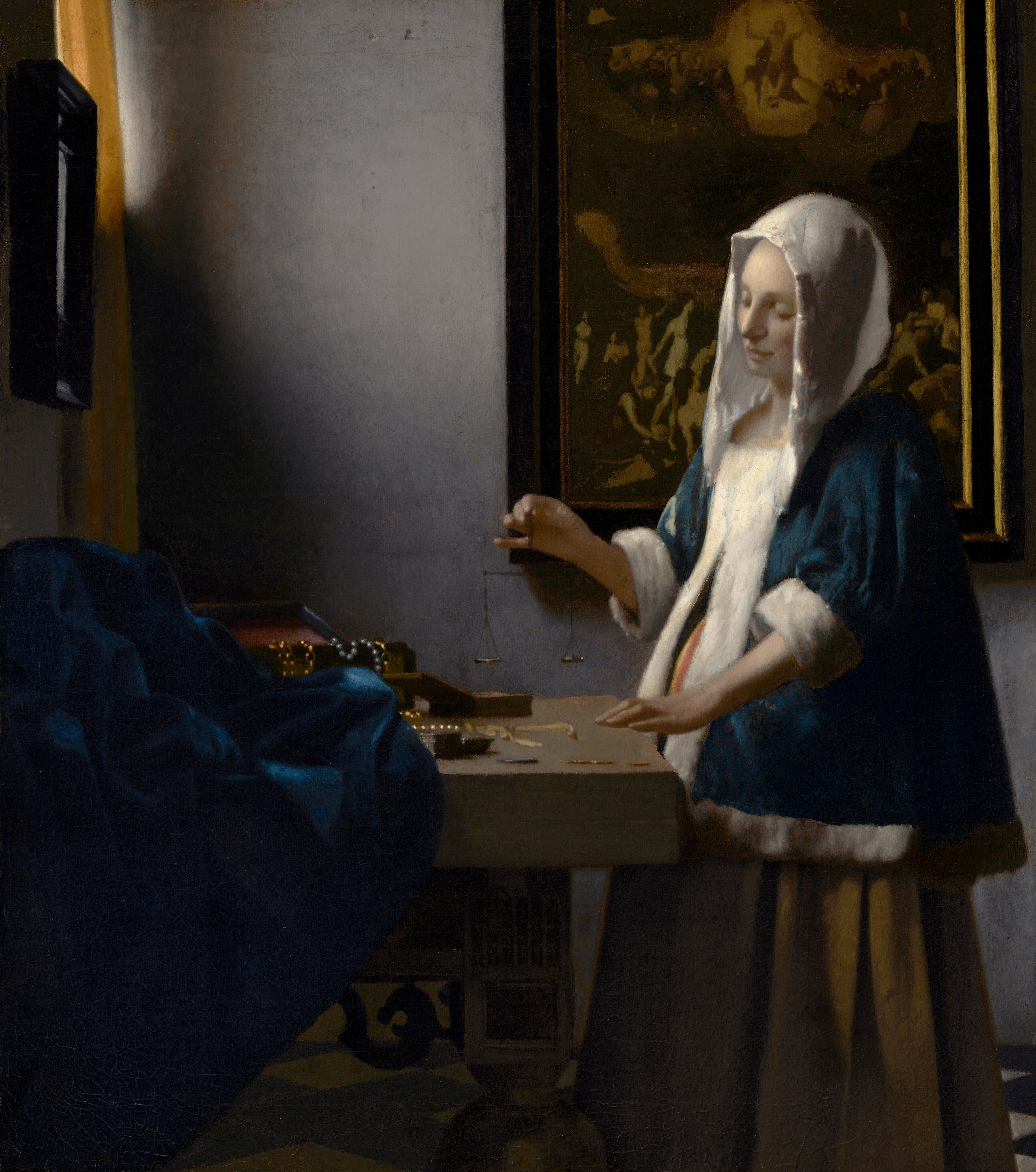
I’ve been thinking about why there’s something comforting about accumulation. The new book. A healthy savings account. The recent IKEA run where I came home with drawer organizers I didn’t need, but that briefly represented a tidier version of my life.
Each thing I acquire carries the outline of a self I’m working toward. The woman who has read all of these books. Who has enough money that she never has to feel trapped.
That last one is the one I find hardest to say out loud.
I accumulate money.
I tell myself it’s prudence. Responsibility. But past a certain point, it becomes something else. The savings grow, and with them, a feeling that I am building walls. Padding the perimeter. If I have enough, nothing can corner me. No job I hate. No dependence. No humiliation. No being stuck.
A friend of mine talks about “exit society.” The fantasy that you can accumulate enough leverage to opt out of anything that threatens you. It protects me from having to do or be someone I don’t want to be.
But safety at that scale does something else, too. It dulls urgency. It makes risk feel unnecessary and action feel optional.
I read something recently in a Ryan Holiday book, a line he attributed to Emerson: A person whose life is cushioned falls asleep.
I recognized myself in those words. My cushion is real. And there are parts of me that have been sleeping inside it.
What I actually want is friction.
Travel that disorients me. That leaves me in tears because of the discomfort. Rooms that challenge me. Conversations that expose the edges of my thinking. Work that risks visible failure. I want my children to see a world bigger than the one we can control.
Six and a half years of their lives have passed, and we have stayed mostly inside the perimeter. I won’t let them fail because I so fear failure myself.
So instead, many of my days look the same.
Wake. Dress. School run. Office chair. Lunch. Finish work. Close computer. Childcare. Netflix. Five minutes of reading. Lights off.
There is nothing wrong with this life. It is stable. It is gentle on my nervous system. It is safe.
It is also very easy to disappear inside.
But adding friction doesn’t require another book on my nightstand. None of it requires a higher savings milestone before I am allowed to begin.
With every book I buy, what I’m actually accumulating is distance.
Distance from the moment I choose something irreversible. From finding out that the exceptional nine-year-old has become an ordinary adult. From having to test whether I am as capable as I imagine I might be. Because potential is intoxicating — it asks nothing of you.
Every so often, I feel the urge to detonate the whole structure. Book the one-way ticket. Prove to myself I’m not sleeping.
But I don’t think spectacle is the answer either. Drama can be its own form of avoidance. So can preaching balance. I’ve never lived in balance. I’ve only known tension.
Between the part of me that craves regulation, routine, steadiness and the part that wants risk, expansion, aliveness. Both have shaped my life. Both have exhausted me.
For a while now, I’ve let the steady one lead while I stacked the books. I padded the edges and told myself I was preparing.
Maybe I was.
The books are still stacked beside my desk. I know I will buy more. I may never get through the pile. But the woman on the other side of the stack doesn’t exist. I do — doubtful, unfinished, and under-read, still reaching for the next book. And I will have to be enough.
“I pick them up. I restack them. I don’t put them away.
Because as long as they’re there, there is still the possibility that I will become the woman who has read them.”
There’s something tender about that possibility. Sometimes the books we keep close aren’t about what we’ve finished, but about who we’re still becoming.
I spent a long time accumulating stuff and hiding behind the glossy layers of what I imagined demonstrated achievement to those looking on to my life. But all that stuff ended up suffocating me and defining me. The need to change came as an epiphany and after a lot of heartache I ditched it all and became lighter and able to move again. Easier to say and do when a solo person but I am a calmer, healthier person now because those things are not weighing me down. I love love love books and they are still my haven. This is such an interesting piece again Lauren. Thank you. I always look forward to your thoughts as they provoke my own.